

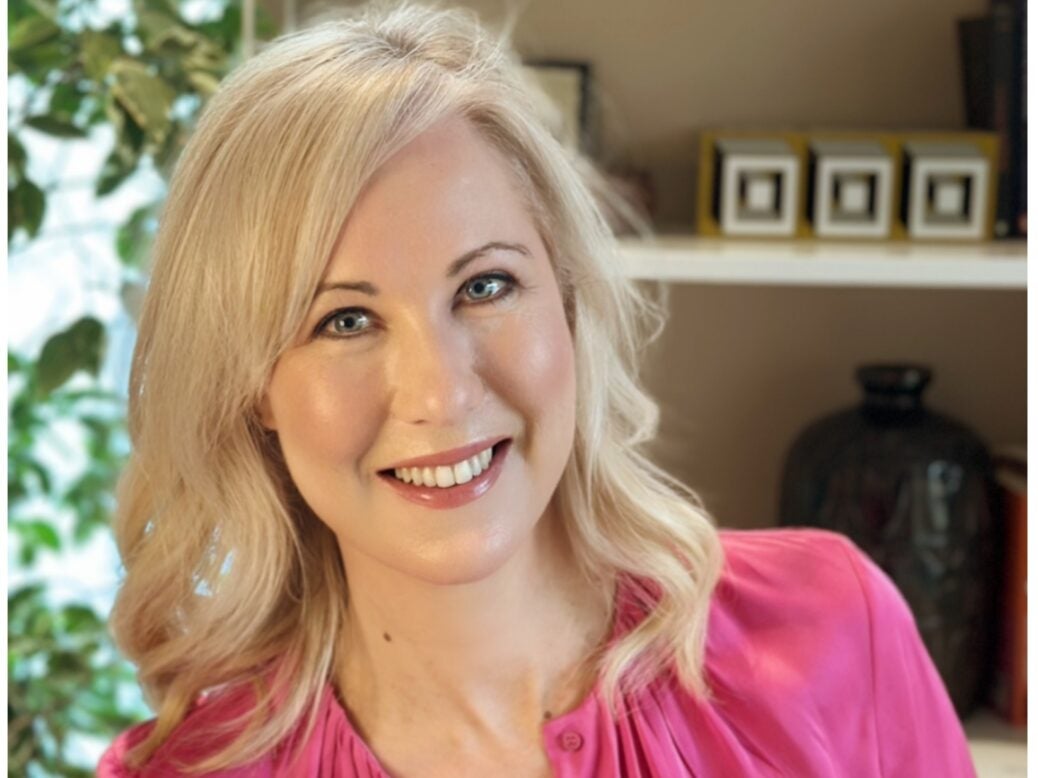
Former Newsnight correspondent and British Medical Journal investigations editor Deborah Cohen says “powerful people behaving badly” is what keeps her motivated.
Cohen (who is a medically qualified doctor) was an editor at the British Medical Journal for more than ten years until 2015. She spent half her tenure there as investigations editor having established the publication’s investigations unit. She was also a correspondent for Newsnight between 2019 and 2022, followed by a year as science editor at ITV News before moving into freelancing.
In January, she published her book Bad Influence: How the Internet Hijacked our Health, which explores the transformation of a healthcare system driven by online trends. She is currently a senior visiting fellow at the London School of Economics.
What was your breakthrough moment?
Leaving medicine to become a journalist was the first big turning point. It wasn’t an obvious or particularly safe move, but I was never particularly good at conforming – which helps when you’re a journalist, I think.
I remember a member of my family hearing a poll that put doctors among the most respected people in society, while journalists languished near the bottom. She said: “You’re going from the upper echelons of society to the gutter.”
I replied: “It’s all right. I’m quite comfortable swimming in the brown stuff.”
I suppose it didn’t help that I was the first woman in my family to go to university and I got into medical school at that. I don’t think my Grandy (Scouse for grandad) ever fessed up to his mates that I was no longer a doctor.
But as trite as it sounds, journalism allowed me to combine my medical and scientific understanding with a desire to ask difficult questions. I think you can have a huge impact on health as a journalist.
What’s currently keeping you up at night?
Where do you start, given the current news agenda? I was genuinely worried about AI destroying humanity. That was until the other day, when I couldn’t even get ChatGPT to make a PowerPoint presentation – a task I’d happily outsource to pretty much anyone. Or perhaps that’s proof it has already developed superintelligence – it knows better than to waste precious time learning how to do PowerPoint.
What gets you out of bed in the morning?
Arseholes, mainly. I have a burning sense of injustice and fairness. Nothing gets me out of bed faster than somebody powerful behaving badly and assuming they’ll get away with it.
How are things going right now, what’s working?
It’s an odd but exciting time. When you write a book, you never quite know where it will land. It’s not like making a big documentary or investigation: you know you’ll work completely unpredictable hours, go through a brutal edit, get some press coverage and – if you work for the BBC – end up knee-deep in complaints that you’ll be responding to for months.
The book has opened up lots of different worlds. I’m doing more talks, panels and podcasts than I ever imagined, moving between politics, policy, journalism, health and technology. One of the biggest surprises is how well it has landed with the medical and scientific worlds. It’s been shortlisted for the Royal Society Trivedi Science Book Prize, which has meant a great deal.
I’m also writing more features now rather than working mainly in television and I’ve pivoted towards academia, which I wasn’t entirely expecting. Although perhaps I should have been – much of my career has been spent sitting somewhere between academia through the British Medical Journal (BMJ) and the mainstream media. I suppose what’s working is finally bringing all those different parts of my career together.
What has been your proudest achievement?
Probably when I thought I’d outsmarted my dad aged five. My brother and I grew up with a liberal peppering of four-letter words and my dad used to bribe us Liverpool fans with sweets and swear words to go to Maine Road to watch Manchester City with him. The only word he wouldn’t teach us was the C-word. One day I came back from school and I proudly announced that I knew it: “crap artist”. He feigned shock and horror. My chest burst with pride.
From a work perspective, I genuinely don’t think about it day to day. But it’s nice when someone quotes one of your stories back to you years later without realising it was yours.
In 2009, I broke a story for the BMJ about the flu drug Tamiflu and the lack of evidence supporting the claims used to justify spending billions stockpiling it for a pandemic. Eight of the ten trials evaluating its effectiveness hadn’t been published.
About eight years later, a public health doctor quoted the story back to me without knowing I had worked on it. I didn’t say anything. The fact that it had simply become part of public health teaching was enough.
Biggest mistake, and what did you learn from it?
I was health correspondent for Newsnight during the pandemic when, because of restrictions, only two people were allowed in an edit suite – the editor and either the producer or reporter. Normally, we’d all have been in there.
I had leaked documents from a local authority. We filmed them, but we were pushed for time and missed a watermark on the back that identified the authority. I hadn’t seen it during filming and we didn’t spot it in the edit. I kicked myself for months afterwards. Since then, I’ve double-checked every frame of every document and never assumed somebody else will have spotted something.
Who or what inspires you and why?
Genuinely, it’s the people around me. Friends who are teachers and public-sector workers and people I studied and worked alongside in the NHS. People who just crack on with it without courting fame or glory.
If you could give your younger self one piece of advice, what is it?
Life isn’t meritocratic. It’s much easier when you’re posh, public school and (increasingly) have a good PR. And that makes me sound like I have a total chip on my shoulder…
What is your work mantra?
Follow the evidence wherever it leads – and keep a good supply of tin hats for when people wish you hadn’t.
Email pged@pressgazette.co.uk to point out mistakes, provide story tips or send in a letter for publication on our "Letters Page" blog
